
When you compare air spring manufacturers, start with where the product is actually made and by whom. Then check whether the aftermarket version is the same as the OE version, whether the range matches your part numbers, what evidence backs the quality claims, and the full warranty terms. Ask for documents, not promises.
Selecting the right air spring manufacturer for your aftermarket range goes far beyond checking price lists or comparing catalogue sizes. What truly matters is understanding who actually makes the product and where, whether the range aligns with your customers’ vehicles, what evidence supports the quality claims, and how the supplier supports you once you start working together.
Spec sheets and catalogues alone don’t show you how reliable a supplier is. Are agreements kept? Is batch-to-batch quality consistent? Does the supplier communicate openly when something changes? For distributors, predictability is often as important as the product itself.
If you distribute air suspension parts for trucks, trailers, or buses, the questions below will help you compare any new brand on equal terms.
They’ll help you filter marketing talk from real, documented value – and support your business decisions with facts.
As a manufacturer, we believe in transparency. After each question, you’ll find the NEOTEC answer for reference.
The questions to ask every supplier
Ask every supplier the same questions, and always request documentation – not just promises from a website. Written proof beats marketing every time.
| Criteria | What to Ask | NEOTEC Example |
| Manufacturer | Who makes the air springs, and where? Do they have their own production plant? | TIP-TOPOL, Polish family manufacturer since 1988, certified IATF 16949:2016, ISO 9001:2015, ISO 14001:2015. Every NEOTEC air spring is made in our own plant in Pobiedziska, Poland. |
| Experience | OE, aftermarket, or both? | Both. TIP-TOPOL supplies OE manufacturers and the aftermarket |
| Quality vs. OE | Is the aftermarket product the same as the OE product? | Yes. Same quality, same materials, same production lines as the air springs we supply to OE manufacturers |
| Range | Does it fit your truck, trailer, and bus portfolio? | 850+ types, 95% EU coverage, strong coverage of Japanese and American vehicles, 40 new types/year, co-developed with distributors |
| Quality evidence | What backs up quality claims? | NEOTEC Quality Triangle™: NRX™ rubber, OELine™ process, N9M™ endurance testing |
| Endurance testing | What was tested, how, and by what standards? | N9M™: 9,000,000 cycles at 3 Hz, 50-60mm, 5-9 bar, must remain airtight and functional |
| Warranty | How long, what’s covered, and how are claims handled? | Up to 3 years, vs. 2-year industry standard. Full terms in the Proof Pack. Typical claim resolved in 14 days |
| Supply/support | How do ordering, delivery, and launch support work? | European supply, sales support, e-commerce, orders from 1 unit. |
| Price positioning | Where does the brand sit, and what does that mean for your margin? | Smart premium: premium-level quality at a price much closer to budget brands than you might expect |
Want a custom comparison for your own range? Send us your list of part numbers and applications – we’ll confirm product matches, warranty, and supply terms for your portfolio.
1. Check where your air springs are actually made
Start with the basics: Who is responsible for the product you will be selling? Where are the air springs actually produced, and who takes accountability for every unit? Which quality standards cover the site? Do they also supply OE manufacturers – and if so, how does that experience shape their aftermarket offer?
Not every brand on the market has its own factory. Some aftermarket brands source air springs from third-party producers. That is a legitimate model, but the logo moulded into the air spring or the label on it does not tell you where the part was made. Ask for the production site, by name and location.
Equally important: Who will be your direct contact, how are commitments confirmed, and how are problems resolved when they happen?
NEOTEC example:
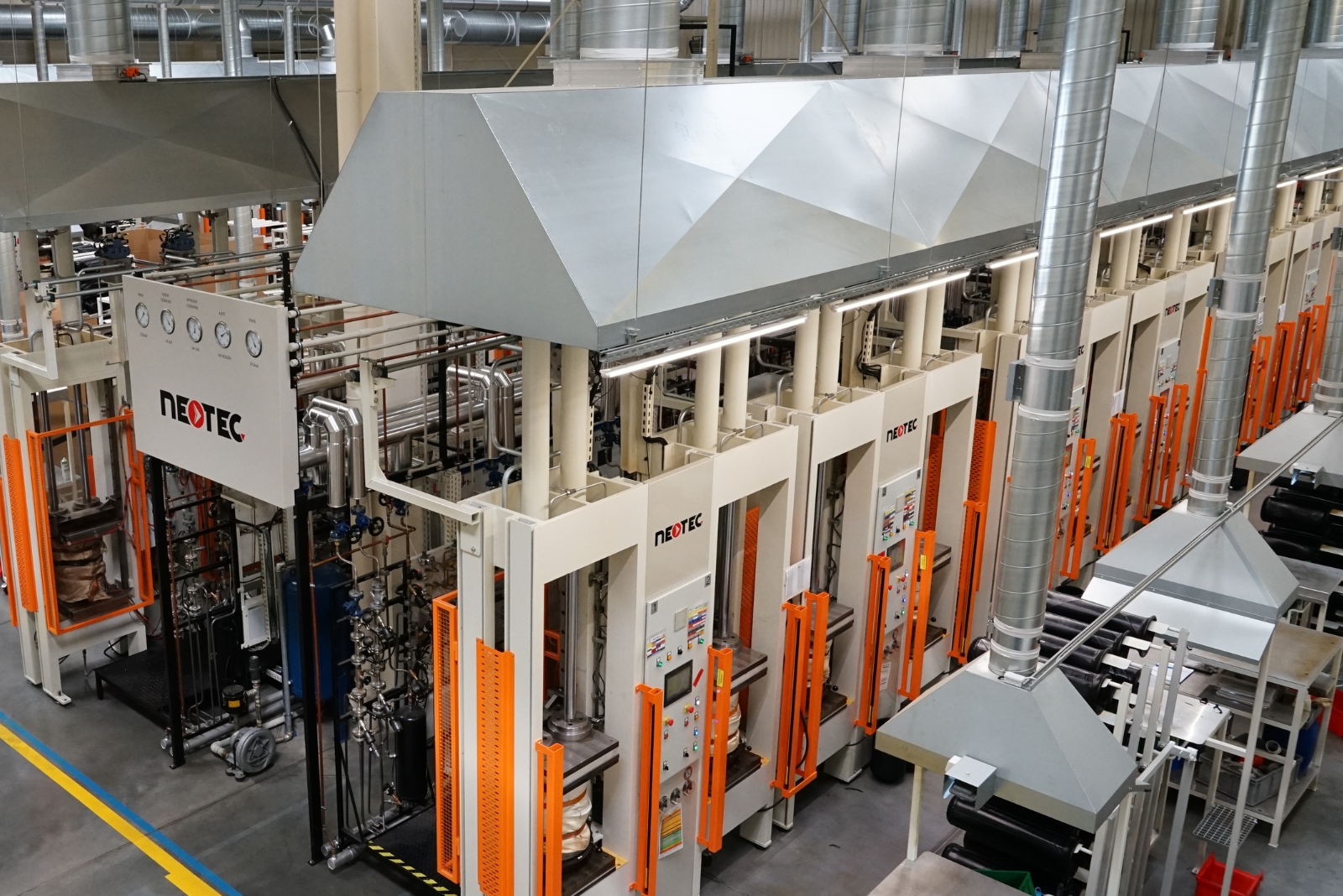
NEOTEC air springs are manufactured by TIP-TOPOL in Poland. With nearly 40 years of experience, we supply both OE manufacturers and the aftermarket. NEOTEC is not a label on someone else’s product. Every NEOTEC air spring is made in TIP-TOPOL’s own plant in Pobiedziska, Poland, with the same quality, the same materials and on the same production lines as the air springs we supply to OE manufacturers. NEOTEC is our dedicated brand for distributors, built on this foundation.
Being a European manufacturer means more than geography: it’s about keeping promises, consistent quality, and open communication. As a second-generation family business, we focus on long-term partnerships – not just one-off orders.
With NEOTEC, you know exactly who you’re working with: a named manufacturer, a transparent production site, decades of experience, and a predictable way of doing business.


2. Evaluate application coverage against your portfolio
A large catalogue is only valuable if it matches your customers’ needs. Ask suppliers to compare their range with your actual assortment or target applications. Confirm in writing which assemblies and variants are covered.
NEOTEC example:
Our range covers over 850 air spring types and more than 95% of EU commercial vehicles. And it does not stop at Europe: we also cover a wide range of Japanese and American trucks, trailers and buses, so the range works for mixed fleets and for markets outside Europe. We add about 40 new types each year, developed by our in-house R&D team in cooperation with distributors.
Every new type is validated against the original OE air spring for the same application. Our lab tests rubber, textiles, metal, and plastic for durability against fatigue, weather, and temperature. Feedback from the production floor and vehicles in service feeds directly into ongoing development. We look at the full product lifecycle – from production to recovery.
Sign up for our newsletter and you’ll be the first to hear about new types.
The quickest check is your own list. Send us your reference numbers and we’ll map NEOTEC coverage and any gaps. If something’s missing, let us know – we expand the range with input from our distributors.
3. Compare quality claims through supporting evidence
Words like “premium” or “OE quality” are just words – ask for evidence and specify which products or processes it covers.
Let’s start with the most important point. NEOTEC aftermarket air springs are the same quality as our OE air springs: the same materials, the same production lines and the same work instructions as the air springs we deliver to OE manufacturers. No “aftermarket version”, no compromises.
We break quality down into three pillars: material, process, and proof. Together, these form the NEOTEC Quality Triangle™.
NRX™: Material
Every NEOTEC air spring uses NRX™ (NEOTEC Rubber eXtreme), our proprietary European rubber compound. It remains flexible at -50°C and stable up to +60°C, with tolerance for short peaks above that. It’s engineered to resist oxygen, ozone, and UV – factors that age rubber. Whether your fleet runs Nordic routes in winter or southern corridors in summer, the compound performs consistently.
Temperature is only part of the story. NRX™ is also behind our endurance results – it powers air springs through N9M™ testing, with representative types running 9,000,000 cycles. Only compounds that meet strict lab criteria go into production, ensuring batch-to-batch consistency.

OELine™: Process
OELine™ means NEOTEC air springs are made on the same production lines, from the same compounds, and with the same work instructions as those supplied to OE manufacturers. There’s no separate, lower-spec aftermarket version – just the same build. Every step follows a set procedure, with traceability from raw material to finished product. Each air spring is pressure-tested before leaving the plant, and we track warranty claims as a share of annual production. Production is certified to IATF 16949:2016, ISO 9001:2015, and ISO 14001:2015, and audited regularly. The result: a stable, repeatable, and compliant process – unit after unit.
N9M™: Proof
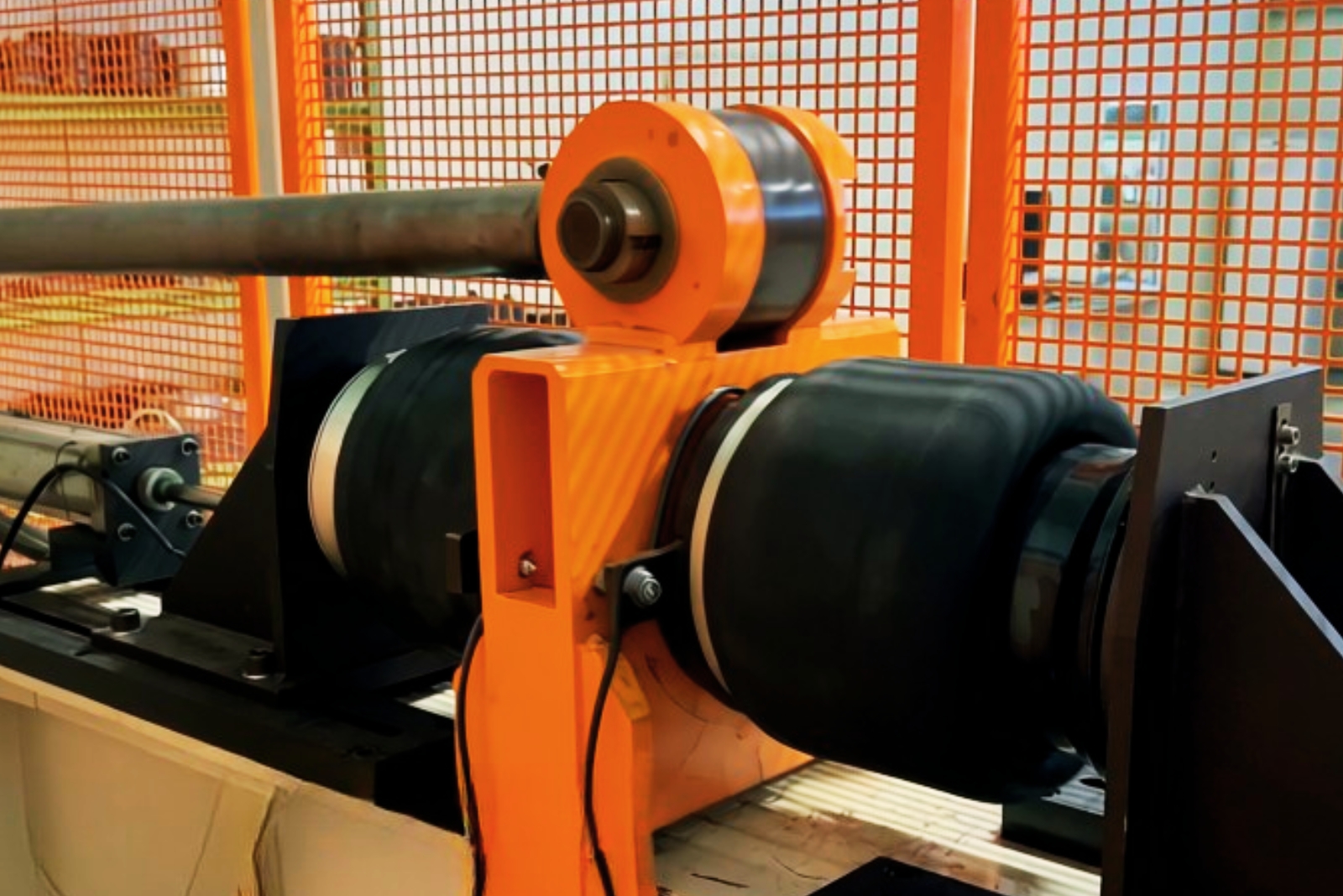
The final part of the NEOTEC Quality Triangle™ is proof – how we test and what the results show. N9M™ is our laboratory validation standard. Representative NEOTEC air spring families are tested to 9,000,000 compression and expansion cycles at 3 Hz, with 50-60 mm amplitude and 5-9 bar working pressure, depending on the air spring type. That’s about 35 days of non-stop machine operation. To pass, the air spring must stay airtight and fully functional at the end. Endurance at this level used to be reserved for premium brands. With N9M™, NEOTEC brings it to the aftermarket.
N9M™ is a lab result, not a field claim. Real-world performance is tracked separately: NEOTEC air springs are monitored in daily commercial and municipal fleet operation, where units have stayed in service for years, not months, and that feedback goes straight back into material and process control.
Material. Process. Proof. Three checkpoints. One standard of reliability.
With any supplier, ask for test scope, conditions, and pass criteria. Remember: laboratory cycle counts are not a direct guarantee of mileage or service life. For evidence behind each claim, request the proof – it should include test reports, certificates, and warranty details. At NEOTEC we call it the Proof Pack and we send it on request, after a short verification.
4. Compare warranty terms separately from durability claims
Warranty and endurance tests answer different questions. Testing shows what a product can achieve in controlled conditions; a warranty defines what the supplier stands behind in the field.
NEOTEC example:
NEOTEC air springs come with up to a 3-year warranty – longer than the industry standard. It covers defects in material and workmanship from the production date, provided the air spring is selected, stored, installed, and used according to NEOTEC instructions and typical commercial vehicle conditions.
Full warranty terms, required documents, and claims procedures are in the Proof Pack.
Review these carefully for your range before referencing the warranty in your own sales materials.
Do the same with every supplier – compare the full terms, not just the duration.
5. Assess supply arrangements and distributor support
Next, consider how the day-to-day relationship will work. Ask about ordering, delivery planning, product information, technical support, and launch assistance. Also, check if the supplier sells directly to fleets or end customers in your market – you don’t want to compete with your own supplier.
NEOTEC Example:
NEOTEC is a channel-first brand. We never sell directly to fleets or end customers, so you’ll never compete with us for your own business. We grow through distributors – developing new types with your input and supporting your sales and market launches.
We operate the European way: clear agreements, honest communication and a direct contact who knows your account.
Our offer combines proven quality with sales-ready support and full e-commerce capability. Orders from just one unit.
Share your market, assortment, or launch plans – we’ll show you how it works in practice.
6. Compare price positioning, not only unit price
Unit price is only one factor. Ask where each brand sits in the market, and what that means for your margin.
The true cost appears after the sale. Every air spring return means a claim to process, a replacement to supply, time spent, and sometimes a lost customer. A cheaper part with more returns can cost more in the long run. Always consider total cost of ownership, not just the purchase price.
It’s also about the story you tell your customers. For fleets, longer-lasting air springs mean fewer repairs and less downtime – worth more than a small price difference.
If budget brands are similar in quality, discount becomes your only sales tool. A brand with documented quality lets your sales team offer more – without paying for a famous name.
NEOTEC Example:
NEOTEC is positioned as smart premium: proven quality at a price below the top tier.
You might be surprised how close our prices are to budget brands. The difference is what you get for it: premium-level quality, made on the same lines as our OE air springs. Don’t guess – ask. Send us your top part numbers and compare our quote with what you pay today.
ASK FOR A QUOTE7. Build your shortlist on comparable evidence
There’s no universal ranking for the right air spring manufacturer. What helps is a written, side-by-side assessment based on your own priorities. For each supplier, note:
- Manufacturer and production location, verified
- Own production plant or sourced from third parties
- Confirmed matches for your target part numbers
- Quality documentation and what it covers
- Warranty terms
- Supply arrangements
- Distributor support
- Price positioning
If a supplier leaves something unanswered, mark it as unconfirmed. You’ll see any gaps at a glance and know what to follow up on.
8. Where NEOTEC fits
If you’re looking for a European-made air spring brand for your truck, trailer, or bus range, NEOTEC deserves a spot on your shortlist. Behind it: TIP-TOPOL’s manufacturing expertise since 1988, 850+ air spring types, the NEOTEC Quality Triangle™, and a distributor-focused offer.
The easiest way to check the fit: browse our online catalogue, request the Proof Pack, and send us your list of applications. We’ll handle the rest.
More answers:
NEOTEC FAQ